For creative agencies and production houses, the current state of generative video feels like a high-stakes scavenger hunt. Every week, a new model claims to “disrupt” the industry with a 10-second clip of a photorealistic cat or a swirling nebula. But for those responsible for delivering client-ready assets on a deadline, these isolated demos are essentially noise. The gap between a viral Twitter clip and a production-grade asset is wide, and it isn’t bridged by a longer list of features.
Evaluating generative media tools requires moving past the standard SaaS checklist. In traditional software, you compare “Export to 4K” versus “Export to 1080p.” In generative video, the variables are more volatile: temporal consistency, model bias, motion artifacts, and the “rerender tax”—the hidden cost of generating fifty clips to find one that doesn’t hallucinate a third arm.
The Spec-Sheet Trap in Creative Operations
The most common mistake in evaluating a generative stack is prioritizing a “static feature list.” Because the underlying models—whether it’s Kling, Sora, or Runway—update at a pace that outstrips software development cycles, a feature that seems revolutionary today may be obsolete by the next quarter.
For an agency, “reliability” is a far more valuable metric than “magic.” A tool that offers a single, proprietary model might produce stunning results 10% of the time, but the other 90% is wasted compute and operator hours. This is where the distinction between consumer-facing tools and agency-grade platforms becomes clear. A consumer wants a “one-click” miracle; an operator wants a predictable outcome.
When you lock your workflow into a single-model platform, you are essentially betting on that model’s specific aesthetic and technical limitations. If that model struggles with specific human movements or architectural symmetry, your entire output suffers. Professional workflows demand the ability to pivot between models without rebuilding the entire asset pipeline from scratch.
The Temporal Consistency Stress Test
If you are vetting a Video Editor AI for professional use, the first thing to ignore is the static thumbnail. The real test of a generative model is its performance across time. Temporal consistency—the ability of a video to maintain the identity of objects, lighting, and textures from frame 1 to frame 120—is the primary bottleneck in professional adoption.
To truly stress-test a tool, ignore the “cinematic landscape” prompts. Instead, test for:
- Complex Physics: Generate sequences involving liquids being poured, hair blowing in the wind, or fabric draping over a moving body. These are the areas where models like Wan 2.7 or Kling often show their true colors. If the water turns into digital “mush” or the fabric clips through the skin, the model isn’t ready for high-end commercial work.
- Micro-Movements: Check for “flicker” in the background. In many lower-tier generative tools, the background pixels will shift or breathe unnaturally even if the foreground subject is stable.
- Style Transfer Integrity: When using video-to-video tools, how well does the AI maintain the original’s skeletal motion? If the style transfer “hallucinates” new limbs during a fast turn, the tool will require heavy manual masking in post-production, defeating the purpose of an AI-driven workflow.
The Strategic Case for Model Aggregation
The most efficient way to mitigate the risks of generative video is to stop looking for the “one tool to rule them all” and instead look for a centralized hub. The reality of the current market is that different models excel at different tasks.
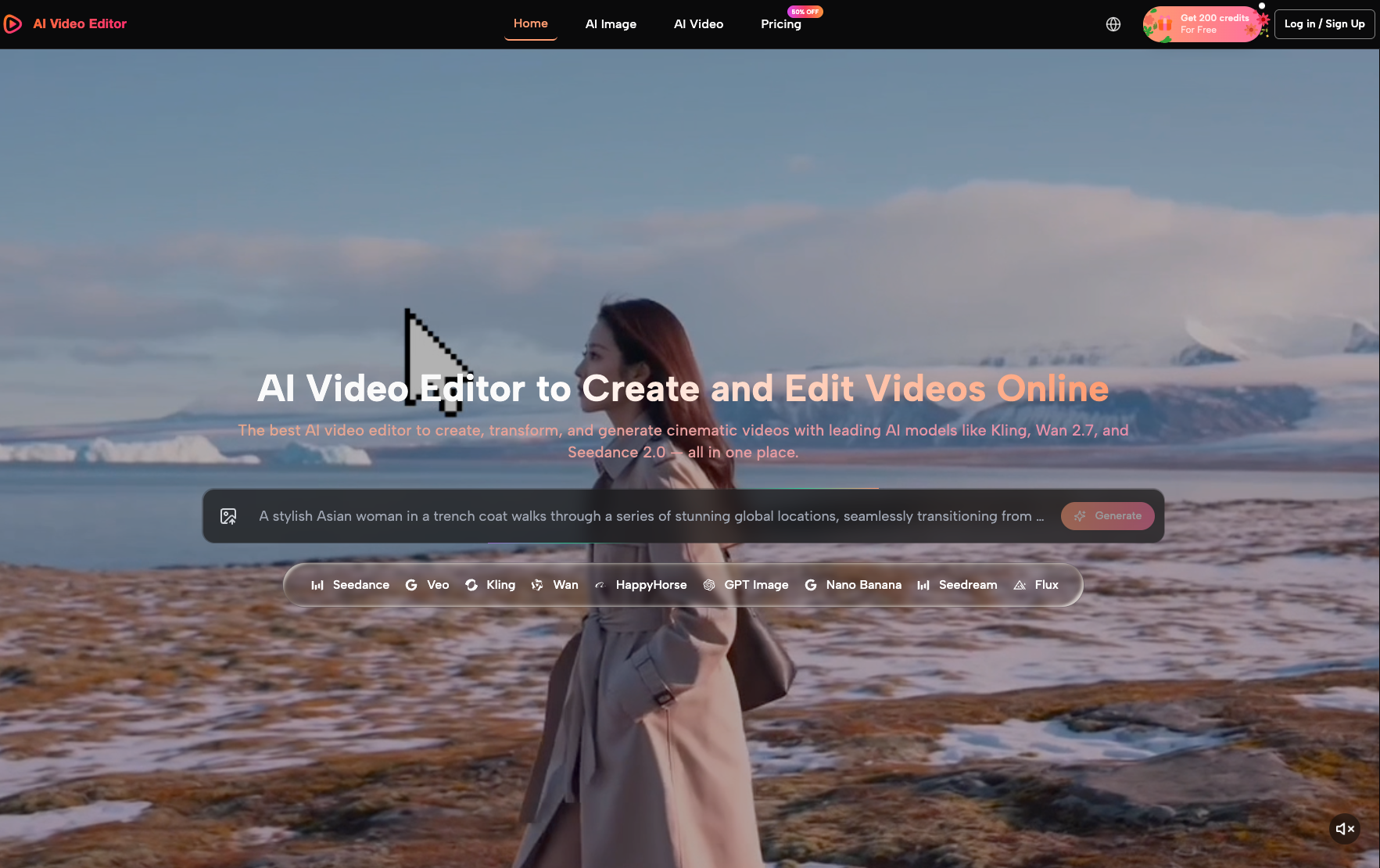
For instance, Google Veo might handle wide-angle cinematic sweeps with incredible stability, while Seedance 2.0 might be superior for stylized, high-contrast motion. An agency-grade AI Video Editor should ideally function as a model aggregator. This allows an operator to toggle between Kling, Wan, or Seedance depending on the specific creative brief.
From an operational standpoint, this reduces “subscription fatigue” and minimizes the friction of jumping between different browser tabs and UI layouts. More importantly, it future-proofs the agency. When a new, superior model like Wan 2.7 enters the market, a centralized platform integrates it, allowing the creative team to access the new tech without having to learn a new interface or re-verify their billing details. This flexibility is what allows a small team to produce at the scale of a much larger studio.
Bridging the Gap Between Prompt and Final Delivery
Bridging the Gap Between Prompt and Final Delivery
Prompting is only the first 20% of the creative process. In a professional environment, raw AI output is almost never the final product. It is a raw ingredient. This is where the “Editor” part of the equation becomes critical.
When you evaluate a tool, look at the “post-generation” suite. Can the platform handle 4K upscaling without introducing “plastic-looking” skin textures? Does it have built-in tools to remove subtitles or unwanted artifacts? Can you Edit Videos Online with the same precision you would expect from a light NLE (Non-Linear Editor)?
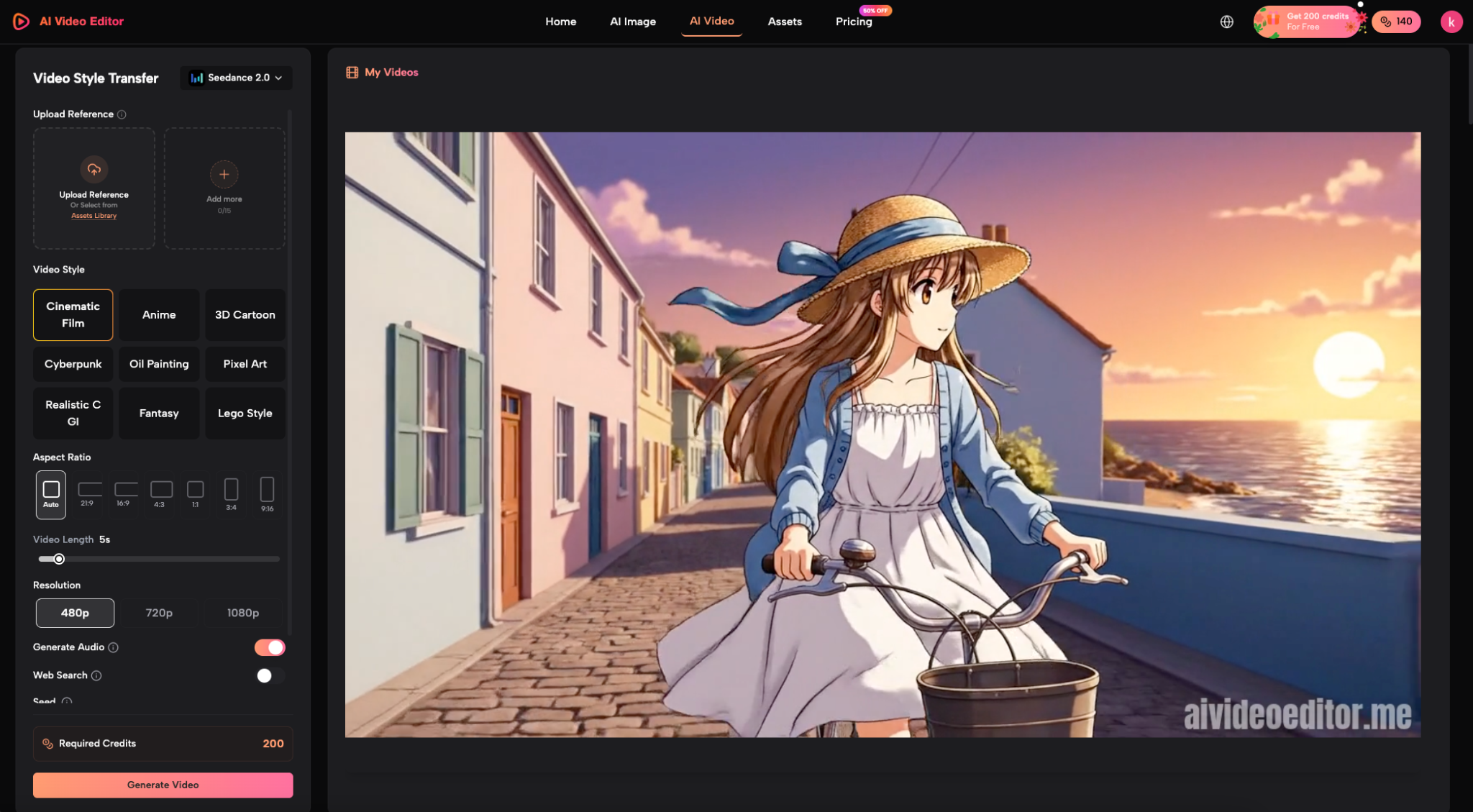
The ability to perform prompt-driven transformations alongside traditional editing—like video-to-video style transfer or AI-assisted enhancement—is what separates a toy from a tool. If an operator has to export a clip from an AI generator, move it to a different upscaler, and then move it to a third tool to remove a watermark, the workflow is broken. The goal is to keep the “creative loop” as tight as possible.
The Hard Ceilings of Current Generative Tech
It is important to maintain a level of skepticism when integrating these tools into client-facing pipelines. Despite the rapid progress, there are several “hard ceilings” that currently limit the technology, and ignoring them can lead to over-promising and under-delivering.
First, precise character continuity remains an unsolved challenge for almost all generative video models. If you need the exact same character to perform different actions across five different scenes, you will likely encounter “character drift.” While some tools are improving their “actor reference” capabilities, it is still a game of probabilities. It is often better to tell a client that character-driven narratives will require a hybrid approach—perhaps using AI for backgrounds or specific effects—rather than 100% generative shots.
Second, the risk of model hallucinations in branded environments is significant. If a brand has a very specific “Pantone Blue” that must be maintained, many generative models will struggle, as they tend to prioritize the overall “vibe” of the prompt over technical color accuracy. This is a moment where human oversight and traditional color grading are still non-negotiable.
Third, high-motion photorealism is still hit-or-miss. While a slow-motion shot of a person walking looks incredible, a high-speed car chase often results in “warping” of the vehicle’s geometry. When evaluating tools, we must be honest about what they can actually do today versus what they might do in six months.
A Practical Evaluation Framework
When you are ready to select a platform for your agency or creative workflow, move beyond the landing page. Run a small pilot project—a 15-second “proof of concept”—and track the following:
- Iterative Speed: How long does it take from the moment you hit “Generate” to the moment you have a usable, upscaled 4K clip?
- Prompt Adherence: Does the tool respect negative prompts (e.g., “no text,” “no blur”)?
- UI/UX Cohesion: Is the interface designed for a professional editor who needs granular control, or a casual user who wants a “surprise me” button?
- Model Variety: Does the platform give you access to a breadth of models (Kling, Wan, Flux, etc.), or are you stuck with one engine?
The goal is to build a repeatable asset pipeline. By focusing on temporal consistency, model aggregation, and post-generation control, you move from “playing with AI” to “producing with AI.” The industry is shifting from a focus on what the models can do to what the editors can do with the models. In that shift, the flexibility of your toolkit is your most significant competitive advantage.
